Quick Answer
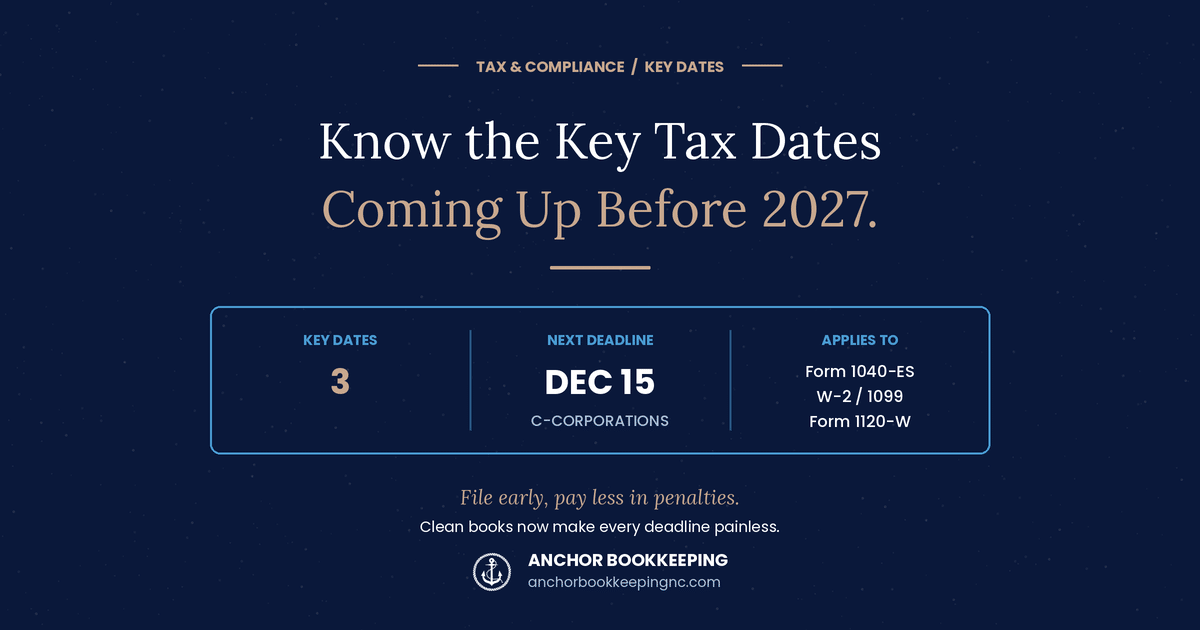
Three key tax deadlines are coming before the end of 2026: December 15 (Q4 estimated tax for C-corporations), January 15, 2027 (Q4 2026 estimated tax for self-employed and 1099 individuals), and January 31, 2027 (W-2 and 1099 filing deadline for anyone with employees or contractors). Getting your books in order now — rather than in January — is what makes each of these easy instead of stressful.
As the year winds down, tax season has a way of sneaking up on small business owners. Between year-end bookkeeping, holiday schedules, and the usual day-to-day of running a business, it’s easy to let a key date slip past — and the IRS doesn’t offer much grace when that happens.
Here’s what’s actually on the calendar between now and the start of 2027, and what each deadline means for you.
December 15, 2026 — Q4 Estimated Tax Payment (C-Corporations)
If your business is structured as a C-corporation, your fourth-quarter estimated tax payment is due December 15. This is the final estimated payment of the 2026 tax year for corporations, and missing it can trigger an underpayment penalty even if your return is filed on time next spring.
January 15, 2027 — Q4 2026 Estimated Tax Payment (Self-Employed & 1099)
If you’re self-employed, a freelancer, or a 1099 contractor, your final 2026 quarterly estimated payment is due January 15, 2027. This covers income earned September through December. Most self-employed individuals need to make these payments four times a year rather than waiting until the April filing deadline — and the safe harbor rule (paying at least 90% of what you owe for 2026, or 100% of what you owed in 2025) is worth understanding if you’re not sure whether you’re on track.
January 31, 2027 — W-2 and 1099 Filing Deadline
If you paid employees or independent contractors in 2026, W-2 and 1099-NEC/MISC forms are due to both the recipients and the IRS by January 31. This is the deadline that tends to catch business owners off guard, because it depends entirely on having clean, accurate books for the full year — not just a quarter. Payroll records, contractor payments, and expense categorization all need to be reconciled well before this date to avoid errors or a last-minute scramble.
Why Your Books Matter for All Three
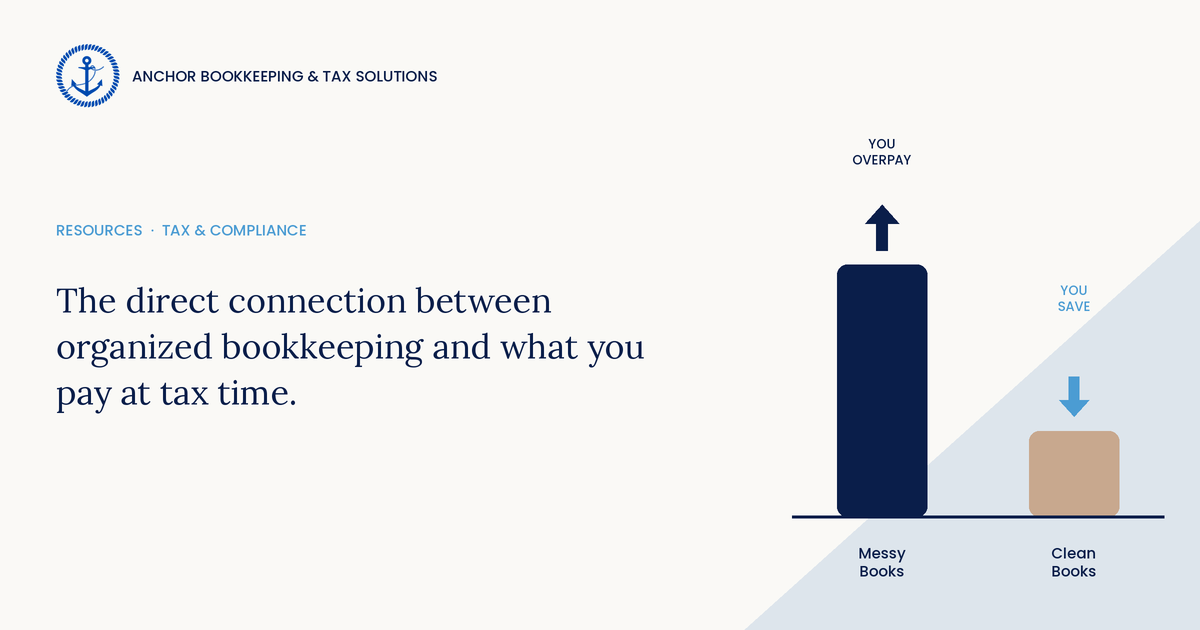
Every one of these deadlines comes down to the same thing: accurate, up-to-date bookkeeping. Estimated tax payments are only as good as the income figures behind them, and W-2/1099 accuracy depends on clean payroll and contractor records kept consistently throughout the year — not reconstructed in January.
This is also where bookkeeping and tax preparation working together, rather than separately, makes the biggest difference. When the same team maintains your books and prepares your return, nothing gets lost in translation between what happened in your business and what goes on your tax forms.
Ready to make this your easiest tax season yet? Anchor Bookkeeping & Tax Solutions handles your books and your taxes — one team, no handoffs.
About the Author
Jenny Rodriguez is the founder of Anchor Bookkeeping & Tax Solutions, a QuickBooks Platinum ProAdvisor with 10+ years of experience helping small businesses stay organized, compliant, and confident about their numbers. Bilingual in English and Spanish, Jenny personally reviews every client’s situation — no call center, no handoffs.
This article is for general informational purposes only and does not constitute tax, legal, or financial advice. Please consult a qualified tax professional regarding your specific situation.
FAQS
What happens if I miss the January 31 deadline for W-2s or 1099s?
Late filing penalties apply per form and increase the longer the forms go unfiled, so it’s worth prioritizing even if other parts of your tax prep are still in progress.
Do I need to make a Q4 estimated tax payment?
If you’re self-employed, a 1099 contractor, or operate as a C-corporation and expect to owe tax for the year, you likely need to make an estimated payment. If you’re unsure whether you meet the safe harbor threshold, it’s worth checking before the deadline rather than after.
Can Anchor help with both my bookkeeping and my tax return?
Yes. Anchor offers tax preparation alongside our bookkeeping services, so the same team that manages your books year-round can also prepare your return — with full visibility into your numbers from day one.
When should I start preparing for tax season?
Now. The businesses that find tax season painless are the ones whose books are already clean going into January, not the ones trying to catch up in the final weeks before a deadline.
Browse Resources by Topic
Reach Out for Expert Guidance
Contact Anchor Bookkeeping and Tax Solutions today for tailored support in managing your financial needs. Our team is ready to provide personalized assistance to help you achieve your financial goals.